
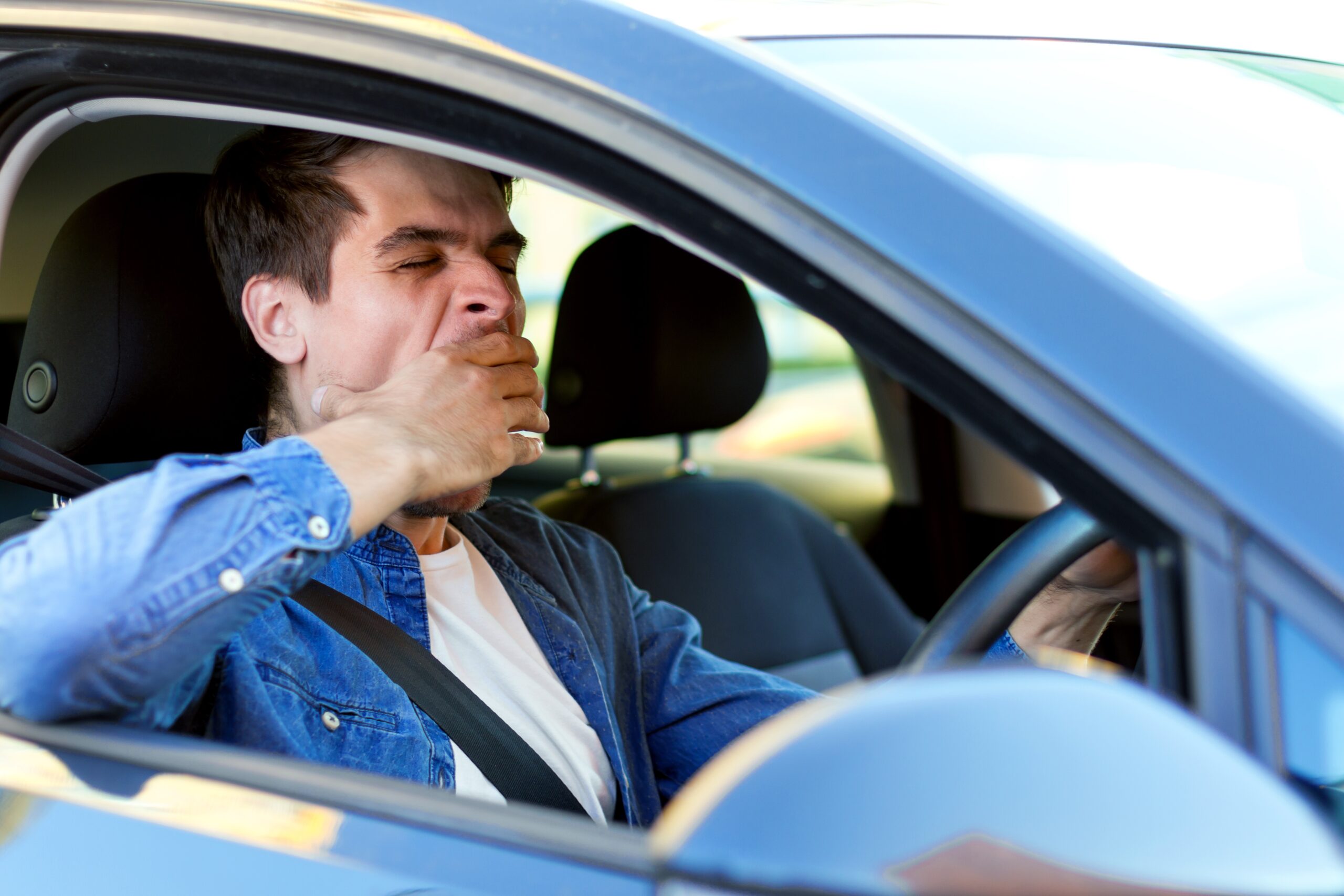
Tired drivers have slower reaction times and suffer from reduced attention, awareness, and ability to control their vehicles. Research suggests driving tired can be as dangerous as drink-driving.
DID YOU KNOW
There is no excuse for falling asleep at the wheel and it is not an excuse in law.
- Up to one fifth of accidents on motorways and other monotonous types of roads may be caused by drivers falling asleep at the wheel.
- 18 to 30 year old males are more likely to fall asleep at the wheel when driving late at night.
- Modern lifestyles such as early morning starts, shift work and late night socialising can lead to excessive tiredness due to inadequate rest.
- All drivers who fall asleep at the wheel have a degree of warning.
- Natural sleepiness/tiredness occurs after eating a large meal.
- Changes in body rhythm produce a natural increased tendency to sleep at two parts of the day:
- midnight to 6am
- 2pm to 4pm
TIPS TO AVOID TIREDNESS WHILST DRIVING
Driving when tired greatly increases your risk of a collision. To minimise this risk:
- Make sure you are fit to drive. Do not begin a journey if you are tired. Get sufficient sleep before a long journey.
- Avoid long journeys between midnight and 6 am, when natural alertness is low.
- Plan your journey to take sufficient breaks. A minimum break of at least 15 minutes after every two hours of driving is recommended.
- If you feel sleepy, stop in a safe place. Do not stop in an emergency area or on a hard shoulder of a motorway.